


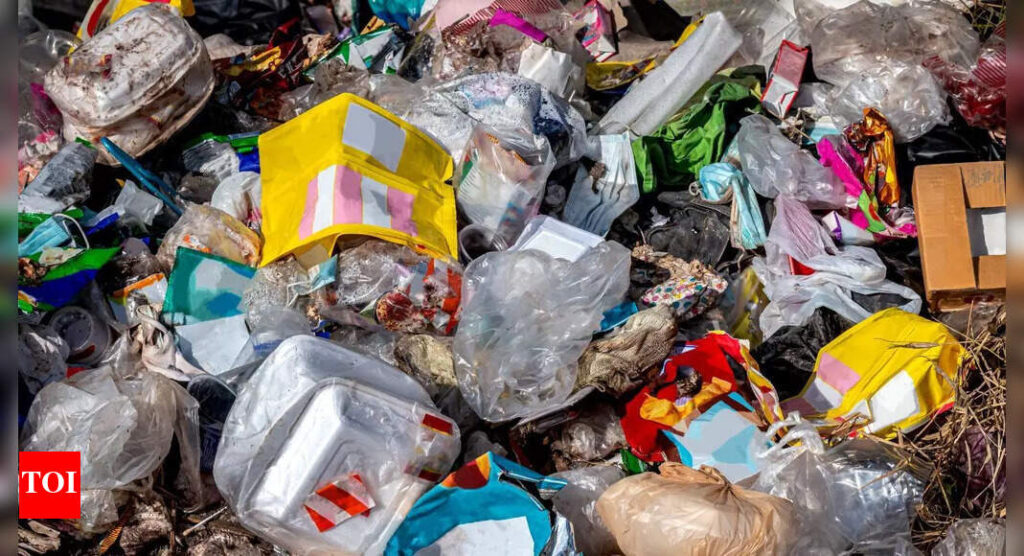
Plastic waste has long been one of the world’s biggest environmental headaches, choking oceans, polluting soil, and breaking down into harmful microplastics. At the same time, carbon dioxide (CO2) emissions continue to fuel climate change, threatening ecosystems and human health. Now, scientists at the University of Copenhagen may have found a way to tackle both problems at once. They have developed a new material called BAETA, made by upcycling ordinary PET plastic bottles and textiles, which can capture CO2 efficiently. Instead of sitting in landfills or floating in the sea, this waste plastic could now be used as a weapon against climate change.
How plastic becomes a climate solution
The team discovered a way to chemically transform PET plastic, the same type used in bottles and clothing, into a material that absorbs carbon. This new material, BAETA, has the ability to “grab” CO2 directly from the air or from exhaust gases released by factories. Once the material is saturated, the CO2 can be released through a gentle heating process. The gas can then be stored safely underground or reused in industries that need carbon, such as fuel production.Unlike many existing carbon capture methods, BAETA is surprisingly energy-friendly. It can be made at room temperature and does not require heavy or complex processing. The material is also highly durable and remains effective even under the high temperatures usually found at industrial chimneys. What makes BAETA stand out even more is its dual role—it not only helps fight climate change by capturing CO2 but also gives a new purpose to plastic waste that would otherwise pollute land and oceans.
From lab to industry
For now, BAETA exists mainly in research labs, but the scientists are confident it can be scaled up for real-world use. They believe the first applications will be in industrial plants, where exhaust gases could be passed through BAETA units before being released into the air. The challenge now is attracting investment to produce the material on a large scale, turning it into a practical solution for global industries.
A win-win for the planet
The potential impact of BAETA is enormous. If adopted widely, it could help solve two of the world’s biggest problems—plastic pollution and climate change—at the same time. Discarded bottles and textiles, which often end up in landfills or oceans, could instead become powerful tools for reducing greenhouse gases. As the researchers put it, BAETA transforms one of humanity’s worst waste problems into an opportunity for climate action. It is a striking example of how science can turn “trash into treasure.”


