
Related News

The Sombrero galaxy and its glowing halo of stars have never looked this good. The US National Science Foundation’s NOIRLab released the latest photo of the popular hat-shaped galaxy on

Researchers in China have discovered the 11th new lunar mineral, ‘Cerium–Magnesium Changesite,’ from the first Moon meteorites recovered in China. This important advancement, announced by the China Geological Survey, represents

China’s space mission (AP image) China has selected two Pakistani astronauts as candidates for its space programme, according to the state’s Manned Space Agency.In a statement issued on Wednesday, the

Challenge to Elon Musk’s SpaceX: Jeff Bezos’ Blue Origin to attempt first reused booster launch of New Glenn rocket Blue Origin, the US space company founded by Jeff Bezos, is

MUMBAI: Three days after the successful splashdown of Artemis-2, the Trump administration on Tuesday issued a memorandum which among other things includes safely deploying nuclear reactors in space orbit as

BENGALURU: In the vast hierarchy of the universe, the smallest galaxies are often overlooked. But a new study now suggests they may hold clues to one of astronomy’s most persistent

Trending News

In today’s digital age, the opportunity to make money online without any initial investment is more accessible than ever before. Whether you’re a student looking to earn some pocket money,

In today’s digital world, make money online has become a dream many want to turn into reality. Whether you’re looking for a side hustle or aiming to build a full-time

JSW Cement, the building materials arm of Sajjan Jindal-led JSW Group, has reduced the size of its upcoming initial public offering (IPO) to Rs 3,600 crore and will open the

The agricultural Gross Value Added (GVA) growth is expected to moderate to 4.5% in the first quarter of FY26, down from 5.4% in the preceding quarter, according to a report

Foreign portfolio investors (FPIs) turned net sellers in the Indian equity market in July, pulling out Rs 17,741 crore amid rising global trade tensions. According to data from NSDL, this

Avenue Capital Group-backed Asset Reconstruction Company (India) Ltd (ARCIL) has filed its draft red herring prospectus (DRHP) with markets regulator Sebi on Friday to raise funds through an initial public

Can humans have babies in space? What researchers say might shock you |

Word Count: 340 | Estimated Reading Time: 2 minutes


Can humans have babies in space? What researchers say might shock you

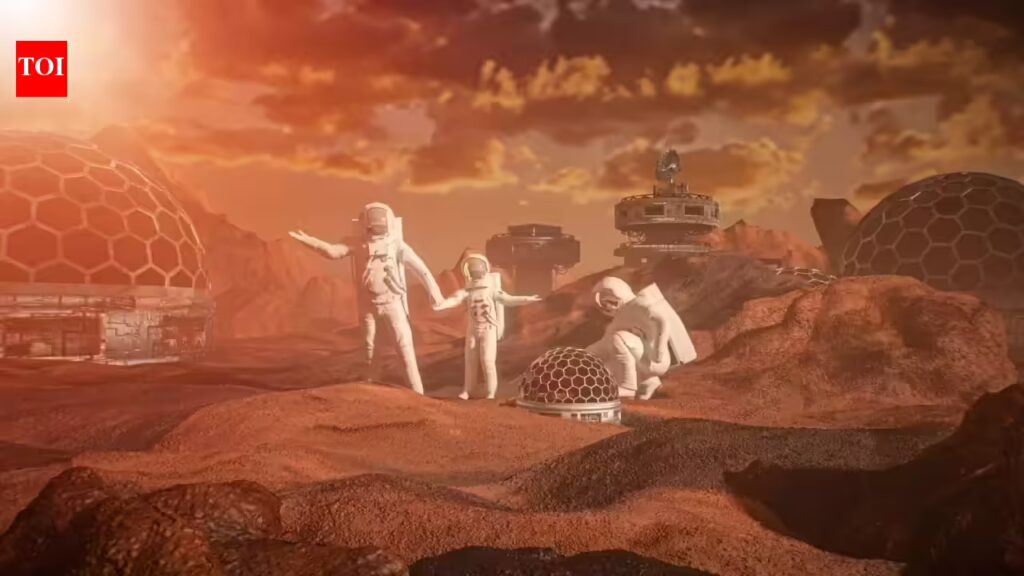
Humanity has been reaching for the stars for decades. Moon landings, Mars rovers, and long stays on the ISS. But there’s one question that seems to hang in the air: can humans actually have children in space? It sounds simple. But it isn’t. Space is not just empty air with combination of radiation, microgravity, stress, it all piles up. A new study published in Reproductive BioMedicine Online tries to tackle the unknowns, but the answers are still murky. Short trips seem okay. Long missions? Experts say the risks multiply. Fertility, embryo development, and even basic reproductive health could all be affected.

What happens to the human body when you try to reproduce in space

In microgravity, hormones fluctuate, and sperm and egg quality can drop. Embryos might develop differently. In lab animals, some studies show normal growth. Others show problems. It seems unpredictable. Radiation is another major worry. Cosmic rays can damage. That’s bad for cells, worse for developing fetuses. Cancer risk increases. Experts note that these effects accumulate with time.Short-term trips on the ISS appear mostly safe. But longer stays? Researchers say extended missions pose hazards to both male and female astronauts. Gravity changes, sleep cycles get disrupted, psychological stress is high. Radiation exposure continues. We just don’t fully understand how all this interacts with human reproduction. Scientists stress more research. Protective measures like radiation shielding are needed. Ethical rules, too. Reproduction in space is not just medical. It’s moral, social, and practical. Dr Fatahi Karouia from NASA says reproductive health “can no longer remain a policy blind spot.” It seems space travel is outpacing our understanding of human biology.

Why having babies in space is complicated

As humanity moves toward sustained off-world habitats, questions multiply. Fertility, conception, and pregnancy aren’t just abstract ideas; they are pressing issues. Experts warn that without careful study, the unknowns could turn into serious problems. Still, space exploration continues. Maybe one day, humans will reproduce safely off Earth. But for now, caution seems wise.


Source link

Most Popular Articles