
Related News

According to JAXA, the entire flight lasted about 40 seconds. Japan has taken a significant step towards developing reusable rocket technology after its space agency successfully carried out the first

Archaeologists have deciphered a 1,700-year-old inscription at an ancient Roman temple in Turkey that offers rare written evidence of the shift from Mithraism to Christianity during the Roman period.The inscription

Photographic view during the Static Test of SOLVE-ST01 NEW DELHI: The Indian Space Research Organisation (ISRO) has successfully conducted the first ground test of the solid motor for its Sub-Orbital

Astronomers have detected light from a tiny but powerful galaxy that existed when the universe was still emerging from a vast fog of hydrogen gas. The discovery, made using the

Photo credit: PIB NEW DELHI: Indian Railways has approved running India’s first indigenous hydrogen fuel-cell-based train on the Jind-Sonipat section of the Northern Railway, entering the elite club of nations

The National Science Foundation on Thursday reversed a decision to dismantle a sprawling ocean monitoring network after vigorous objections from Democratic lawmakers and scientists who rely on it to track

Trending News

In today’s digital age, the opportunity to make money online without any initial investment is more accessible than ever before. Whether you’re a student looking to earn some pocket money,

In today’s digital world, make money online has become a dream many want to turn into reality. Whether you’re looking for a side hustle or aiming to build a full-time

JSW Cement, the building materials arm of Sajjan Jindal-led JSW Group, has reduced the size of its upcoming initial public offering (IPO) to Rs 3,600 crore and will open the

The agricultural Gross Value Added (GVA) growth is expected to moderate to 4.5% in the first quarter of FY26, down from 5.4% in the preceding quarter, according to a report

Foreign portfolio investors (FPIs) turned net sellers in the Indian equity market in July, pulling out Rs 17,741 crore amid rising global trade tensions. According to data from NSDL, this

Avenue Capital Group-backed Asset Reconstruction Company (India) Ltd (ARCIL) has filed its draft red herring prospectus (DRHP) with markets regulator Sebi on Friday to raise funds through an initial public

Amazon gets FCC approval to launch 4,500 Leo internet satellites

Word Count: 373 | Estimated Reading Time: 2 minutes


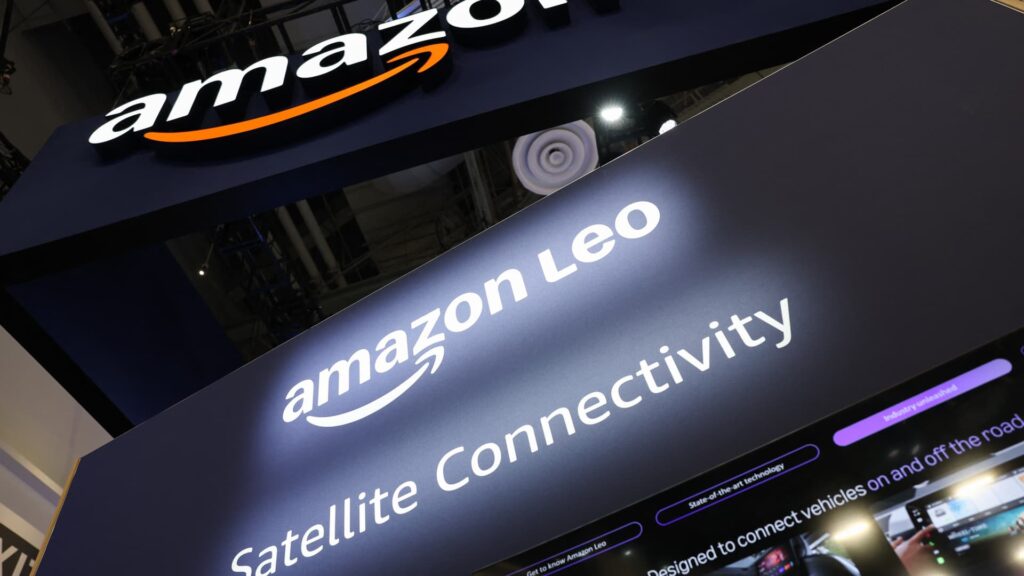
Amazon Leo Satellite Connectivity signage is displayed during the annual Consumer Electronics Show (CES) in Las Vegas, Nevada on January 6, 2026.

Patrick T. Fallon | Afp | Getty Images

The Federal Communications Commission said Tuesday it approved Amazon’s request to deploy 4,500 satellites, expanding the company’s planned constellation as it vies to compete with Elon Musk’s SpaceX.

The FCC’s approval brings the size of Amazon’s planned constellation of low Earth orbit satellites to roughly 7,700 satellites.

The company has sent up more than 150 satellites since April using a variety of rocket launch providers. Amazon has said its goal is to begin providing satellite internet through its service called Leo later this year. The project was announced in 2019.

Amazon’s next set of satellites are its second generation of the orbital systems and they will operate at altitudes of up to about 400 miles, according to the notice. The additional satellites would add support for more frequency bands and extend Leo’s geographic regions.

The FCC said Amazon must launch 50% of the approved satellites by Feb. 10, 2032 and the remaining half by Feb. 10, 2035.

Amazon is working to meet a separate deadline imposed by the FCC to deploy 1,600 of its first generation satellites before July 2026. Late last month, the company asked the agency to extend the cutoff to July 2028 or to waive the deadline altogether. The FCC hasn’t ruled yet on the request.

The company blamed delays beyond its control, including a near-term shortage of rockets to lift the satellites into orbit, on its likely inability to meet the deadline.

Leo is “producing satellites considerably faster than others can launch them,” the company wrote.

The company has invested $10 billion to stand up its internet-from-space service. Leo is poised to rival SpaceX’s Starlink, which has more than 9,000 satellites in orbit and roughly 9 million customers.

Amazon expects to spend $1 billion more on its Leo constellation this year as it deploys more satellites, the company said last week in its latest quarterly report. Amazon finance chief Brian Olsavsky said the company has more than 20 launches planned in 2026 and more than 30 in 2027.

The next Leo mission is set for Thursday, when an Arianespace rocket will fling another 32 satellites into orbit. Amazon has booked 17 other missions with the French company.

WATCH: Amazon defends $200 billion capex plan

Amazon defends $200 billion capex plan


Source link

Most Popular Articles