
Related News

For a long time, scientists believed that only amphibians like salamanders could regrow complex limbs. But then came some groundbreaking findings from Texas A&M University. Researchers there discovered that mammals

NASA’s Jet Propulsion Laboratory recently reached a significant achievement in space travel technology. They successfully tested a lithium-fed magnetoplasmadynamic (MPD) thruster, establishing a domestic power milestone for power output in

While staying at the Imperial Hotel in Tokyo during a lecture tour, Albert Einstein found himself in an awkward situation. A hotel bellboy had delivered a message to his room,

Have you ever wondered why rockets eventually tilt themselves after launch? Most people assume a rocket’s goal is to fly as high as possible, but ‘up’ is only the first

The Sombrero galaxy and its glowing halo of stars have never looked this good. The US National Science Foundation’s NOIRLab released the latest photo of the popular hat-shaped galaxy on

Researchers in China have discovered the 11th new lunar mineral, ‘Cerium–Magnesium Changesite,’ from the first Moon meteorites recovered in China. This important advancement, announced by the China Geological Survey, represents

Trending News

In today’s digital age, the opportunity to make money online without any initial investment is more accessible than ever before. Whether you’re a student looking to earn some pocket money,

In today’s digital world, make money online has become a dream many want to turn into reality. Whether you’re looking for a side hustle or aiming to build a full-time

JSW Cement, the building materials arm of Sajjan Jindal-led JSW Group, has reduced the size of its upcoming initial public offering (IPO) to Rs 3,600 crore and will open the

The agricultural Gross Value Added (GVA) growth is expected to moderate to 4.5% in the first quarter of FY26, down from 5.4% in the preceding quarter, according to a report

Foreign portfolio investors (FPIs) turned net sellers in the Indian equity market in July, pulling out Rs 17,741 crore amid rising global trade tensions. According to data from NSDL, this

Avenue Capital Group-backed Asset Reconstruction Company (India) Ltd (ARCIL) has filed its draft red herring prospectus (DRHP) with markets regulator Sebi on Friday to raise funds through an initial public

What happened to NASA’s ‘Moon Trees’ after they orbited the Moon on Apollo 14 |

Word Count: 447 | Estimated Reading Time: 3 minutes


What happened to NASA’s ‘Moon Trees’ after they orbited the Moon on Apollo 14
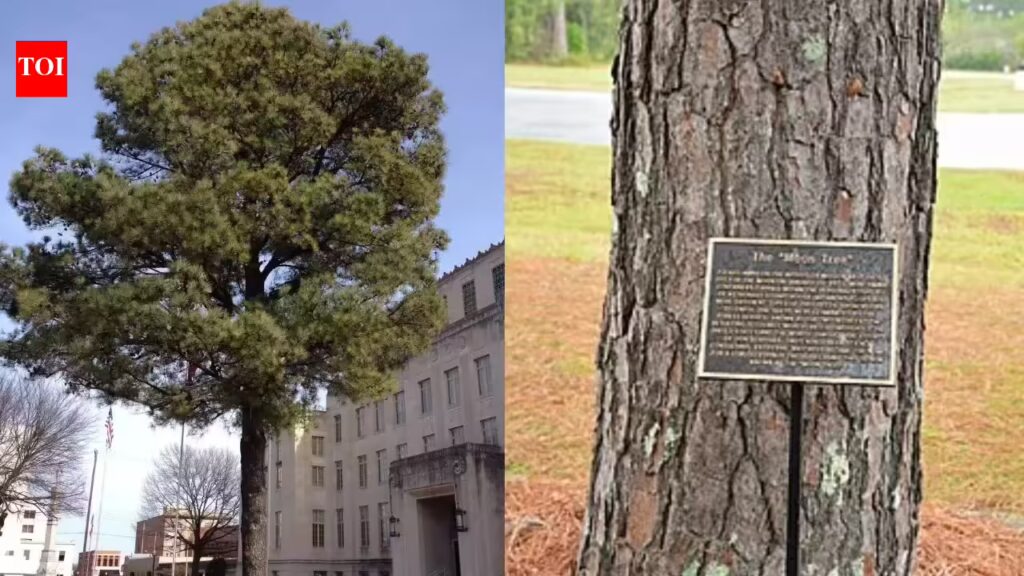
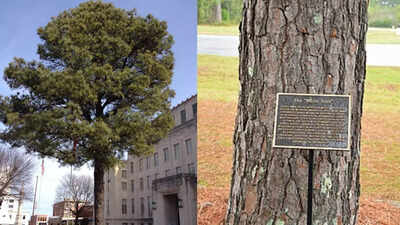
What happened to NASA’s ‘Moon Trees’ after they orbited the Moon on Apollo 14 (Image source: Wikipedia)

What NASA accomplished in the early 1970s is a little-known but truly impressive feat. Instead of putting rockets or robots in space, they put seeds there. Seeds of different trees accompanied astronauts on the Apollo 14 mission in 1971, headed by astronaut Stuart Roosa, a former U.S. Forest Service smokejumper, to learn if the ‘harsh reality’ of space would affect the growth of trees when planted on Earth, as listed in the NASA archives.What followed surprised scientists and inspired communities worldwide. A significant number of seeds germinated and developed into healthy trees that were later widely planted across the United States and elsewhere in the world. Even to date, the Moon Trees are a testament to space exploration that tells a story of space exploration and life on Earth through a scientific experiment that only a handful of projects have been able to achieve.

What happened to the moon trees while they were in space

During the Apollo 14 mission, a few seeds from trees went on board in astronaut Stuart Roosa’s personal equipment bag. As the craft orbited the Moon about 34 times, these seeds went along for the ride without ever actually being in touch with the surface of the Moon. During the post-flight process for cleaning the equipment, due to a sudden change in pressure, some seed pods opened. At first, it was thought that the seeds would be forever damaged. Notably, however, after being planted, many of them developed into full seeds.

A bicentennial forest on Earth

In 1975-76, nearly 400 Moon Tree seedlings were ready for planting in the US Bicentennial celebration. The Moon Trees were distributed by NASA and the US Forest Service to the states and other countries. A Loblolly Pine Moon Tree found its way into the White House, and several others found their place in schools, parks, and arboretums in dozens of US states and countries such as Brazil and Japan. This act of giving the Moon Trees away included an honorary plaque and even a telegram from NASA. The telegram for one of the trees declared it “a living symbol of our spectacular human and scientific achievements.”

Moon trees are living symbols today

Years have turned into decades, and many of the Apollo 14 Moon Trees stand proud across the landscape. The plaques are weathered and faded, but the tale lives. NASA tracks the live Moon Trees today as much for their peculiarity as for their representation of a period of scientific exploration that was anything but tame. It’s a reminder that the power of exploration can take root and grow.


Source link

Most Popular Articles