
Related News

BENGALURU: Scientists from Indian Institute of Science (IISc) reported an advance in the long quest to move electronics beyond silicon, by creating molecular-scale devices that can adapt their behaviour and

The big AI bubble question has been the tech industry’s buzziest debate all year, and one robot has weighed in with its opinion. KOID is a short but slender humanoid

On the 50th anniversary, two legends tell the story of the momentous 1969 moon walk: Apollo 11 commander Neil Armstrong and “CBS Evening News” anchor Walter Cronkite — the man

Softbank has completed its $40 billion investment commitment to OpenAI, sources told CNBC’s David Faber. The Japanese investment giant sent over a final $22 billion to $22.5 billion investment last

Some questions arrive quietly. When is the next full Moon 2026 is one of them. It usually turns up while scanning a calendar or noticing the moon hanging a little

The logo of Japanese company SoftBank Group at the company’s headquarters in Tokyo on November 21, 2025. Kazuhiro Nogi | Afp | Getty Images Shares of data center investment firm

Trending News

In today’s digital age, the opportunity to make money online without any initial investment is more accessible than ever before. Whether you’re a student looking to earn some pocket money,

In today’s digital world, make money online has become a dream many want to turn into reality. Whether you’re looking for a side hustle or aiming to build a full-time

JSW Cement, the building materials arm of Sajjan Jindal-led JSW Group, has reduced the size of its upcoming initial public offering (IPO) to Rs 3,600 crore and will open the

The agricultural Gross Value Added (GVA) growth is expected to moderate to 4.5% in the first quarter of FY26, down from 5.4% in the preceding quarter, according to a report

Foreign portfolio investors (FPIs) turned net sellers in the Indian equity market in July, pulling out Rs 17,741 crore amid rising global trade tensions. According to data from NSDL, this

Avenue Capital Group-backed Asset Reconstruction Company (India) Ltd (ARCIL) has filed its draft red herring prospectus (DRHP) with markets regulator Sebi on Friday to raise funds through an initial public

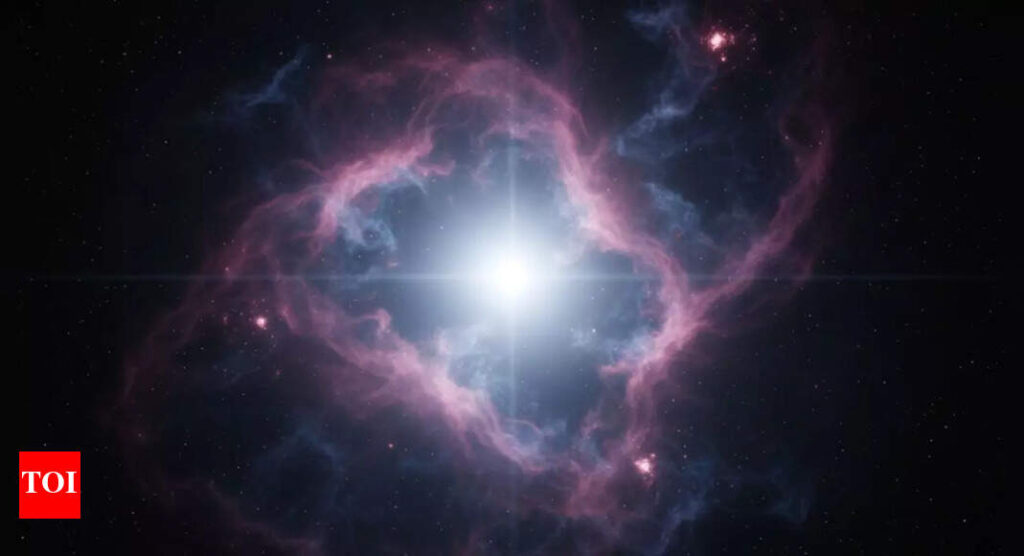
The most pristine star ever found reveals secrets about the universe’s first moments |

Word Count: 700 | Estimated Reading Time: 4 minutes


The most pristine star ever found reveals secrets about the universe’s first moments

Astronomers have discovered the most pristine star ever observed, offering a rare glimpse into the universe’s earliest moments. This ancient celestial body, found in the Milky Way’s halo, contains the lowest levels of heavy elements ever recorded, indicating that it formed shortly after the Big Bang. Scientists believe the star may have been born from the remnants of the very first generation of stars, known as Population III stars. These findings could help researchers understand how the first stars ignited, how they enriched the cosmos with heavier elements, and how galaxies like our own eventually formed.

Pristine star offers a window into cosmic history

The newly discovered star, identified through high-resolution spectroscopy, shows an extremely low abundance of metals such as iron, carbon, and magnesium. In astronomy, “metals” refer to all elements heavier than hydrogen and helium, which were the only elements produced in the Big Bang. The scarcity of these elements suggests that this star formed from nearly pristine material left over from the early universe, largely untouched by subsequent generations of stellar explosions.Population III stars, believed to have been massive and short-lived, have long eluded direct observation. They are thought to have ended their lives in powerful supernovae, seeding the universe with the first traces of heavy elements. By analysing the chemical fingerprint of this newly found star, scientists can infer the properties and life cycles of those elusive first stars. Its composition points to an origin influenced by just one or two early supernova events, offering critical insight into the cosmic transition from a simple to a complex chemical universe.

What this means for future research

The discovery opens new paths for studying stellar archaeology and understanding the timeline of cosmic evolution. With next-generation telescopes such as the James Webb Space Telescope and the European Extremely Large Telescope, astronomers hope to uncover more such stars and even detect the direct light from the first stellar generation. Each new find adds a crucial piece to the puzzle of how matter, stars, and galaxies came to be, and how our universe evolved from simplicity to the complex cosmos we see today.


Source link

Most Popular Articles