
Related News

The Sombrero galaxy and its glowing halo of stars have never looked this good. The US National Science Foundation’s NOIRLab released the latest photo of the popular hat-shaped galaxy on

Researchers in China have discovered the 11th new lunar mineral, ‘Cerium–Magnesium Changesite,’ from the first Moon meteorites recovered in China. This important advancement, announced by the China Geological Survey, represents

China’s space mission (AP image) China has selected two Pakistani astronauts as candidates for its space programme, according to the state’s Manned Space Agency.In a statement issued on Wednesday, the

Challenge to Elon Musk’s SpaceX: Jeff Bezos’ Blue Origin to attempt first reused booster launch of New Glenn rocket Blue Origin, the US space company founded by Jeff Bezos, is

MUMBAI: Three days after the successful splashdown of Artemis-2, the Trump administration on Tuesday issued a memorandum which among other things includes safely deploying nuclear reactors in space orbit as

BENGALURU: In the vast hierarchy of the universe, the smallest galaxies are often overlooked. But a new study now suggests they may hold clues to one of astronomy’s most persistent

Trending News

In today’s digital age, the opportunity to make money online without any initial investment is more accessible than ever before. Whether you’re a student looking to earn some pocket money,

In today’s digital world, make money online has become a dream many want to turn into reality. Whether you’re looking for a side hustle or aiming to build a full-time

JSW Cement, the building materials arm of Sajjan Jindal-led JSW Group, has reduced the size of its upcoming initial public offering (IPO) to Rs 3,600 crore and will open the

The agricultural Gross Value Added (GVA) growth is expected to moderate to 4.5% in the first quarter of FY26, down from 5.4% in the preceding quarter, according to a report

Foreign portfolio investors (FPIs) turned net sellers in the Indian equity market in July, pulling out Rs 17,741 crore amid rising global trade tensions. According to data from NSDL, this

Avenue Capital Group-backed Asset Reconstruction Company (India) Ltd (ARCIL) has filed its draft red herring prospectus (DRHP) with markets regulator Sebi on Friday to raise funds through an initial public

‘The best camera to ever exist’: Artemis II crew to study the Moon’s surface mainly with their eyes |

Word Count: 399 | Estimated Reading Time: 2 minutes


‘The best camera to ever exist’: Artemis II crew to study the Moon's surface mainly with their eyes

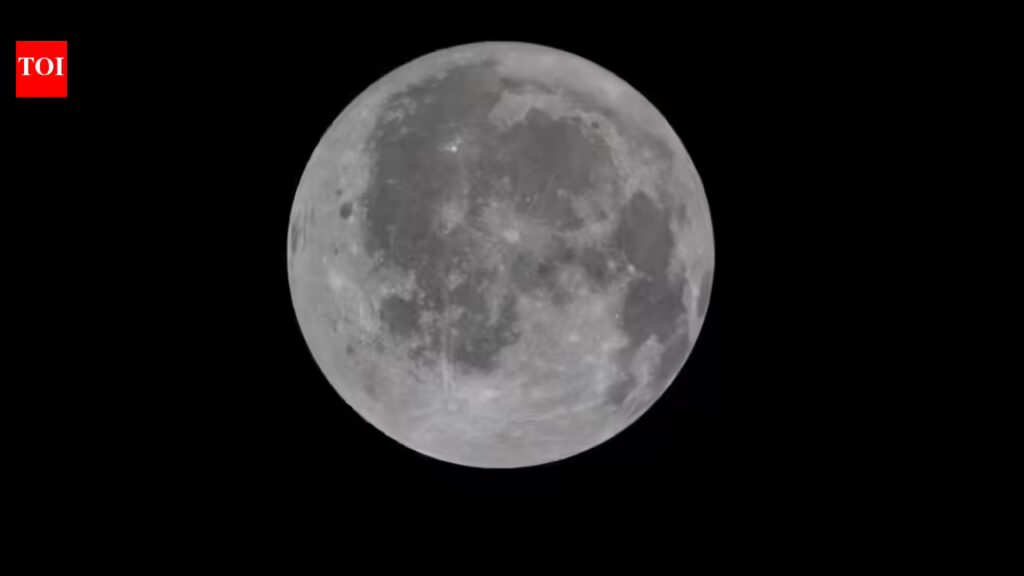
Nasa’s Artemis II astronauts, on a historic journey to the Moon, will study its surface with what lead scientist Kelsey Young calls “the best camera that could ever or will ever exist”—their own eyes. As of early Sunday, the four-member crew, comprising three Americans, commander Reid Wiseman, pilot Victor Glover, mission specialist Christina Koch—and Canadian astronaut Jeremy Hansen, have crossed the “two thirds” mark of their voyage aboard the Orion spacecraft. They are expected to reach the Moon on Monday and conduct a fly-around, capturing images of the lunar far side during the mission. “The human eye is basically the best camera that could ever or will ever exist,” Kelsey Young, lead scientist for Artemis II told AFP. “The number of receptors in the human eye far outweighs what a camera is able to do.”Despite advances in imaging technology, Young noted that human vision excels at detecting colour, context, and subtle changes in lighting that reveal textures on the lunar surface. “Humans can understand how lighting changes surface details, like how angled lighting reveals texture but reduces visible colour,” she added.The crew has undergone more than two years of rigorous training to become “field scientists,” including geological expeditions to Iceland and Canada, simulated lunar flybys, and memorising the Moon’s “Big 15” landmarks. Using an inflatable Moon globe, astronauts practised observing how sunlight alters surface colours and textures, refining their skills for detailed note-taking.Noah Petro, head of Nasa’s planetary geology lab, said the Moon will appear “about the size of a basketball held at arm’s length” to the astronauts. “The question I’m most interested in is, are they going to be able to see colour on the lunar surface,” he said, referring to subtle browns and tans that indicate composition and history.David Kring of the Lunar and Planetary Institute tempered expectations for major discoveries, but emphasised the historic nature of the observations. “Having astronauts describing what they’re seeing… that is an occurrence that at least two generations of people on Earth have never heard before,” he said.Artemis II was launched from Kennedy Space Center’s Launch Complex 39B atop NASA’s Space Launch System rocket on April 1. The mission, the first crewed Moon journey in more than 53 years, advances Nasa’s Artemis programme, which aims for sustainable lunar exploration and eventual human missions to Mars.


Source link

Most Popular Articles