
Related News

The big AI bubble question has been the tech industry’s buzziest debate all year, and one robot has weighed in with its opinion. KOID is a short but slender humanoid

On the 50th anniversary, two legends tell the story of the momentous 1969 moon walk: Apollo 11 commander Neil Armstrong and “CBS Evening News” anchor Walter Cronkite — the man

Softbank has completed its $40 billion investment commitment to OpenAI, sources told CNBC’s David Faber. The Japanese investment giant sent over a final $22 billion to $22.5 billion investment last

Some questions arrive quietly. When is the next full Moon 2026 is one of them. It usually turns up while scanning a calendar or noticing the moon hanging a little

The logo of Japanese company SoftBank Group at the company’s headquarters in Tokyo on November 21, 2025. Kazuhiro Nogi | Afp | Getty Images Shares of data center investment firm

1 Ship to breach Earth’s CRUST Next year, a 600-foot Chinese research vessel will set sail to find the perfect site from where it will start drilling down to the

Trending News

In today’s digital age, the opportunity to make money online without any initial investment is more accessible than ever before. Whether you’re a student looking to earn some pocket money,

In today’s digital world, make money online has become a dream many want to turn into reality. Whether you’re looking for a side hustle or aiming to build a full-time

JSW Cement, the building materials arm of Sajjan Jindal-led JSW Group, has reduced the size of its upcoming initial public offering (IPO) to Rs 3,600 crore and will open the

The agricultural Gross Value Added (GVA) growth is expected to moderate to 4.5% in the first quarter of FY26, down from 5.4% in the preceding quarter, according to a report

Foreign portfolio investors (FPIs) turned net sellers in the Indian equity market in July, pulling out Rs 17,741 crore amid rising global trade tensions. According to data from NSDL, this

Avenue Capital Group-backed Asset Reconstruction Company (India) Ltd (ARCIL) has filed its draft red herring prospectus (DRHP) with markets regulator Sebi on Friday to raise funds through an initial public

NASA just flew a jet at 925 mph without sonic boom noise: Breakthrough could cut travel time by half |

Word Count: 716 | Estimated Reading Time: 4 minutes


NASA just flew a jet at 925 mph without sonic boom noise: Breakthrough could cut travel time by half

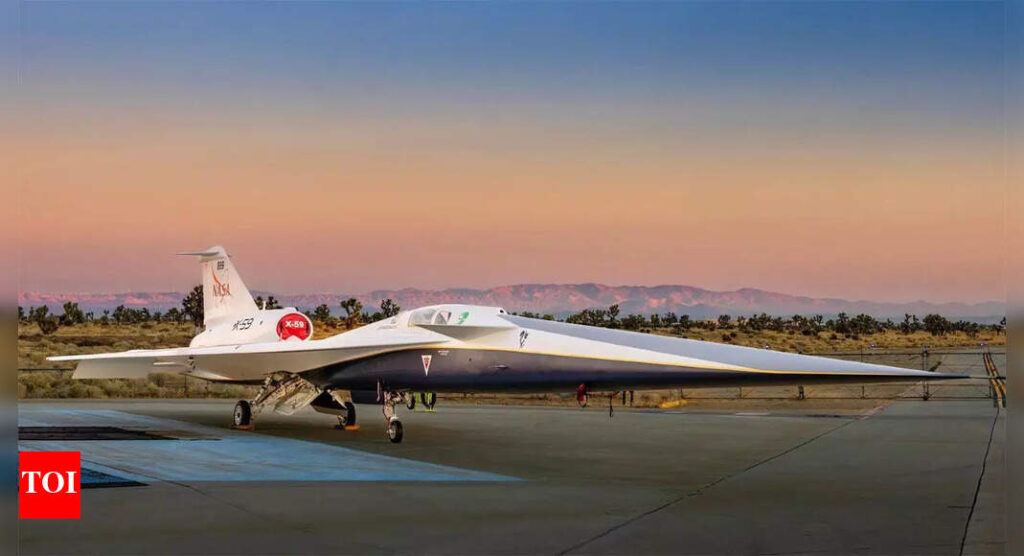
NASA has taken a major step toward transforming the future of high-speed travel. In a successful first flight over the Southern California desert, the agency’s experimental X-59 aircraft demonstrated that breaking the sound barrier does not have to come with the signature explosive sonic boom. Instead, the jet is engineered to produce only a soft “thump,” a noise so subtle that people on the ground may barely notice it. For the first time since the retirement of the Concorde, silent supersonic travel looks like a real possibility.

NASA built it for silence and speed

The X-59 was developed with Lockheed Martin’s legendary Skunk Works team, known for designing some of the world’s most advanced aircraft. The jet’s narrow, elongated nose and carefully sculpted airframe are built to reshape sound waves as it transitions to supersonic speed. It is designed to fly at Mach 1.4, around 925 mph, and at altitudes far above regular passenger planes. Even the cockpit uses cameras instead of a forward window to give the pilot visibility while preserving the aircraft’s smooth profile.This first flight was mostly a safety demonstration, flown at subsonic speeds to ensure systems worked as planned. But the milestone shows the aircraft is ready for more ambitious testing, the kind that pushes beyond the speed of sound. If the X-59 can consistently fly fast without creating disruptive noise, it could challenge longstanding aviation rules that currently ban supersonic passenger flights over land.Supersonic travel was once seen as the future of aviation, yet it disappeared with the Concorde two decades ago. High noise levels, environmental concerns and rising costs grounded the concept. The X-59 brings it back with a modern solution: speed without disturbance. Experts believe this could one day slash flight times on busy routes such as New York to Los Angeles or Tokyo to Singapore, without rattling windows or startling communities below.The aircraft will gradually fly higher and faster in upcoming tests, eventually attempting quiet supersonic travel over populated areas to measure public reaction. NASA will use the data to help regulators set new noise standards for commercial aircraft. If successful, the technology could lead to the return of supersonic passenger jets within the next decade.


Source link

Most Popular Articles