
Related News

While staying at the Imperial Hotel in Tokyo during a lecture tour, Albert Einstein found himself in an awkward situation. A hotel bellboy had delivered a message to his room,

Have you ever wondered why rockets eventually tilt themselves after launch? Most people assume a rocket’s goal is to fly as high as possible, but ‘up’ is only the first

The Sombrero galaxy and its glowing halo of stars have never looked this good. The US National Science Foundation’s NOIRLab released the latest photo of the popular hat-shaped galaxy on

Researchers in China have discovered the 11th new lunar mineral, ‘Cerium–Magnesium Changesite,’ from the first Moon meteorites recovered in China. This important advancement, announced by the China Geological Survey, represents

China’s space mission (AP image) China has selected two Pakistani astronauts as candidates for its space programme, according to the state’s Manned Space Agency.In a statement issued on Wednesday, the

Challenge to Elon Musk’s SpaceX: Jeff Bezos’ Blue Origin to attempt first reused booster launch of New Glenn rocket Blue Origin, the US space company founded by Jeff Bezos, is

Trending News

In today’s digital age, the opportunity to make money online without any initial investment is more accessible than ever before. Whether you’re a student looking to earn some pocket money,

In today’s digital world, make money online has become a dream many want to turn into reality. Whether you’re looking for a side hustle or aiming to build a full-time

JSW Cement, the building materials arm of Sajjan Jindal-led JSW Group, has reduced the size of its upcoming initial public offering (IPO) to Rs 3,600 crore and will open the

The agricultural Gross Value Added (GVA) growth is expected to moderate to 4.5% in the first quarter of FY26, down from 5.4% in the preceding quarter, according to a report

Foreign portfolio investors (FPIs) turned net sellers in the Indian equity market in July, pulling out Rs 17,741 crore amid rising global trade tensions. According to data from NSDL, this

Avenue Capital Group-backed Asset Reconstruction Company (India) Ltd (ARCIL) has filed its draft red herring prospectus (DRHP) with markets regulator Sebi on Friday to raise funds through an initial public

Last Chance To Watch Planetary Parade Until 2040: Check Details

Word Count: 384 | Estimated Reading Time: 2 minutes


The so-called planetary parade which started last month is heading towards its grand finale. For a brief moment on February 28, all planets in our solar system will appear in the night sky – a celestial phenomenon that scientists have described as rare.

After Venus, Mars, Jupiter, Saturn, Uranus and Neptune aligned in the night sky between January 21 and 29, it will be the last time until 2040 that all seven planets, including Mercury, will align to create a spectacular night sky.

What is planetary alignment?

Astronomers use planetary alignment to describe the phenomenon when planets gather closely on one side of the Sun at the same time. Any number of planets, ranging from three to eight constitutes an alignment. Five or six planets showing up together is known as a large alignment, with five-planet alignments significantly more frequent than six. However, seven-planet alignments are the rarest of all.

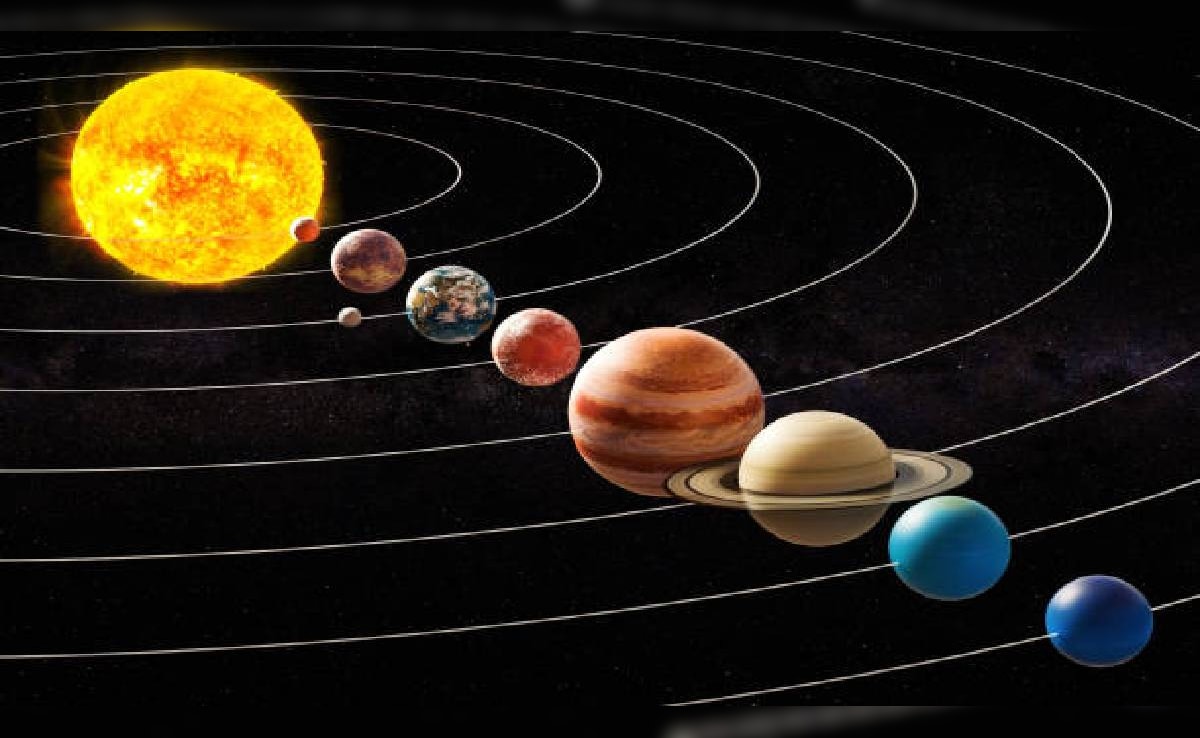
Unlike diagrams and illustrations, the planets will not be visible in a queue. Planets orbit the Sun in different orbits in three-dimensional space which makes it almost impossible for them to come together in a straight line.

“While it’s true that they [planets] will appear more or less along a line across the sky, that’s what planets always do. That line is called the ecliptic, and it represents the plane of the solar system in which the planets orbit around the Sun,” NASA explains.

“This is, incidentally, why we sometimes observe planets appearing to approach closely to each other on the sky, as we view them along a line while they careen around the cosmic racetrack.”

Also Read | Planetary Parade 2025: How And Where To See This Rare Celestial Event In India

How to view the planetary parade?

To witness the parade of planets, get far away from city lights to an open area or hill. If the weather is clear, you will be able to see most planets to the naked eye, bar Neptune and Uranus. A telescope might help you witness these two planets.

Notably, Mars will appear in the east, Jupiter and Uranus in the southeast, and Venus, Neptune, and Saturn in the west. While January was special due to the Quadrantid meteor shower and the partial planetary parade, February has the ingredients to be even more special, owing to the rare alignment.


Source link