


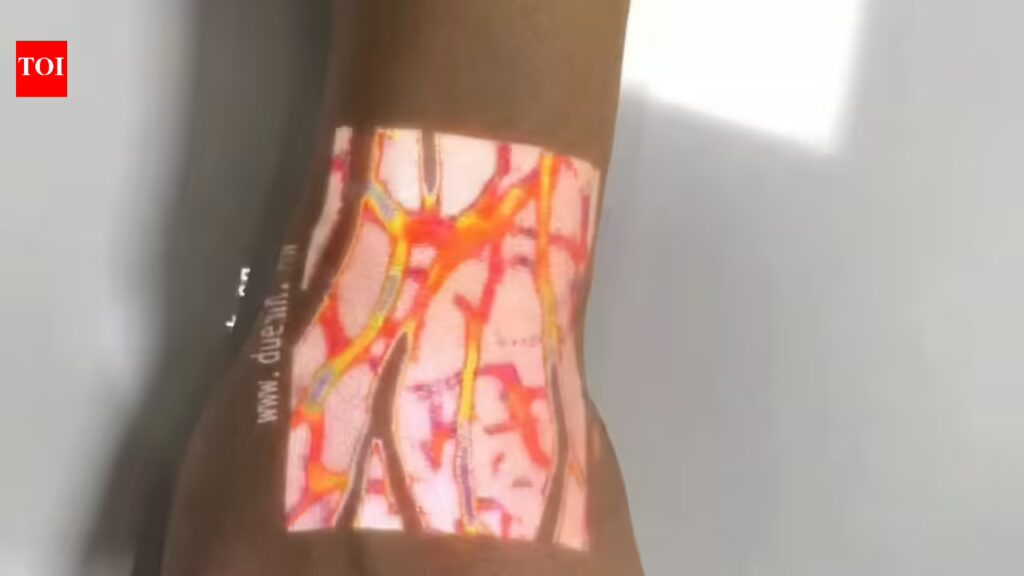
What looks invisible to the naked eye is now easy to spot. A portable medical device developed by Chinese firm Vivolight has gone viral after a short demo clip was shared in a post from the Chinese Embassy spokesperson in India. The video shows the device producing a live vein map on an arm, making it easier to locate veins for injections, blood draws, and IV lines. The clip has sparked curiosity because the projected image appears almost futuristic, even though the goal is practical: faster and more accurate access in routine medical care.
What the device actually does
The gadget is commonly referred to as a “vein finder”. It is designed to highlight veins beneath the skin and display them clearly enough to guide a clinician during venipuncture or IV placement. In the demo, the system projects the vein pattern onto the skin surface, giving a real-time visual guide that can be used immediately without switching attention to a separate screen.
How it works in simple terms
The device relies on near-infrared light, which interacts differently with blood than with surrounding tissue. That contrast allows the system to detect vein patterns and convert them into a clearer image. Projection-based models then display the processed map directly onto the skin, which is why the effect looks like a live overlay on the body.Even in modern hospitals, IV access is not always straightforward. Veins can be difficult to locate in children, older adults, or patients whose veins are less visible. In those situations, a clearer vein map can help reduce delays and improve confidence during insertion, particularly when time is limited and repeated attempts are best avoided.Tools like this are intended for high-traffic clinical settings where staff need reliable access quickly. That includes emergency rooms, paediatric care, and wards where patients require frequent needle-based procedures. Portable systems also attract interest because they can be moved easily between departments and used at the bedside rather than relying on larger equipment.
The bigger picture
It may look like science fiction, but the goal is simple: helping clinicians find veins faster in difficult cases. The viral demo has also drawn fresh attention to China’s fast-growing medical technology sector, where companies are building portable, hospital-ready tools that focus on speed and precision. In settings where missed IV attempts can mean more pain and more time lost, even small upgrades like real-time vein mapping can make a noticeable difference for both staff and patients.


