
Related News

Signage ahead of the Nvidia Live event at CES 2026 in Las Vegas, Nevada, US, on Monday, Jan. 5, 2026. Bridget Bennett | Bloomberg | Getty Images Nvidia director Persis

Databricks co-founder and CEO Ali Ghodsi. Databricks Data analytics software company Databricks has landed $1.8 billion in fresh debt, a person familiar with the matter told CNBC. Databricks now sits

The Intel logo is visible at the India Mobile Congress 2025 in Delhi, India, on October 11, 2025. Kabir Jhangiani | Nurphoto | Getty Images Intel shares plunged 14% Friday

Nvidia founder and CEO Jensen Huang (R) speaks next to BlackRock chairman and WEF co-chairman Larry Fink during the World Economic Forum (WEF) annual meeting in Davos on January 21,

What looks invisible to the naked eye is now easy to spot. A portable medical device developed by Chinese firm Vivolight has gone viral after a short demo clip was

The TikTok USDS (U.S. Data Security) logo appears on a smartphone screen in this illustration photo in Reno, United States, on Dec. 19, 2025. Jaque Silva | Nurphoto | Getty

Trending News

In today’s digital age, the opportunity to make money online without any initial investment is more accessible than ever before. Whether you’re a student looking to earn some pocket money,

In today’s digital world, make money online has become a dream many want to turn into reality. Whether you’re looking for a side hustle or aiming to build a full-time

JSW Cement, the building materials arm of Sajjan Jindal-led JSW Group, has reduced the size of its upcoming initial public offering (IPO) to Rs 3,600 crore and will open the

The agricultural Gross Value Added (GVA) growth is expected to moderate to 4.5% in the first quarter of FY26, down from 5.4% in the preceding quarter, according to a report

Foreign portfolio investors (FPIs) turned net sellers in the Indian equity market in July, pulling out Rs 17,741 crore amid rising global trade tensions. According to data from NSDL, this

Avenue Capital Group-backed Asset Reconstruction Company (India) Ltd (ARCIL) has filed its draft red herring prospectus (DRHP) with markets regulator Sebi on Friday to raise funds through an initial public

Carl Feynman: ‘I’m outdone in minutes’: Computer engineer says AI has surpassed years of his work in a flash

Word Count: 704 | Estimated Reading Time: 4 minutes


'I'm outdone in minutes': Computer engineer says AI has surpassed years of his work in a flash

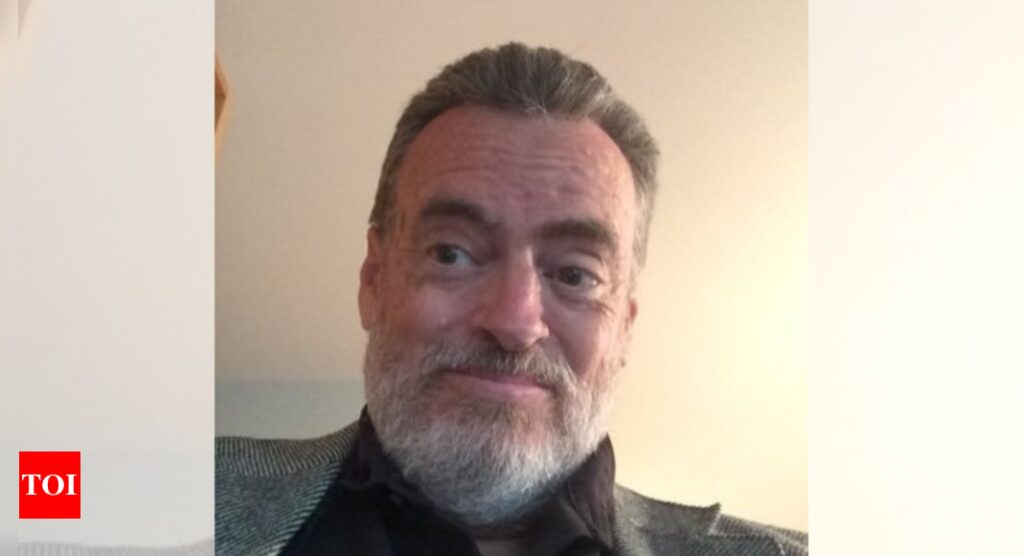
Carl Feynman, son of American theoretical physicist Richard Feynman, pioneered cloth simulation in computer graphics at MIT in 1986. He was both amazed and concerned by AI’s rapid progress. After seeing an AI create a cloth animation in minutes, he shared his thoughts on X, noting how quickly artificial intelligence is outpacing human effort.
“I’m outdone by an AI in a few minutes. They still pay me, but for how long?” Feynman posted, acknowledging how quickly AI models are mastering complex simulations that once required months of research and powerful computers.
The conversation began when an X user shared their experience with Sonnet 3.7, an AI model with reasoning capabilities, which successfully generated an intricate cloth simulation in p5.js—a task that had stumped other leading AI models, including Grok 3 and o1 Pro.
“Can you write the most intricate cloth simulation in p5js,” was the prompt put by the X user.
Recognizing the significance of this breakthrough, the user said: “Wow, Sonnet 3.7 w/ Thinking just solved a problem no other model could solve yet.”
The reaction by Feynman to the simulation quickly gained traction, with the user pointing out Feynman’s legacy: “The man who literally invented modeling cloth in computer graphics at MIT in 1986 saw the video where Claude creates a cloth animation and says: ‘I’m outdone by an AI in a few minutes. They still pay me, but for how long?’”
Who is Carl Feynman?
Carl Feynman, the son of renowned physicist Richard Feynman, made significant contributions to computer graphics by developing early methods for simulating cloth movement. His work laid the groundwork for realistic fabric simulations used in films, video games, and virtual reality. In 1986, his master’s thesis, “Modeling the Appearance of Cloth,” was a pioneering achievement in the field.
Reflecting on that time, Feynman noted: “It took library research and cleverness and originality and months of work and days of time on big computers. Now I’m outdone by an AI in a few minutes.”
While AI continues to break barriers in computational creativity, Feynman’s words highlight an underlying concern: the speed at which AI is advancing, raising questions about the future of human expertise in fields that once relied on deep technical skill and years of experience.


Source link

Most Popular Articles