
Related News

For a long time, scientists believed that only amphibians like salamanders could regrow complex limbs. But then came some groundbreaking findings from Texas A&M University. Researchers there discovered that mammals

NASA’s Jet Propulsion Laboratory recently reached a significant achievement in space travel technology. They successfully tested a lithium-fed magnetoplasmadynamic (MPD) thruster, establishing a domestic power milestone for power output in

While staying at the Imperial Hotel in Tokyo during a lecture tour, Albert Einstein found himself in an awkward situation. A hotel bellboy had delivered a message to his room,

Have you ever wondered why rockets eventually tilt themselves after launch? Most people assume a rocket’s goal is to fly as high as possible, but ‘up’ is only the first

The Sombrero galaxy and its glowing halo of stars have never looked this good. The US National Science Foundation’s NOIRLab released the latest photo of the popular hat-shaped galaxy on

Researchers in China have discovered the 11th new lunar mineral, ‘Cerium–Magnesium Changesite,’ from the first Moon meteorites recovered in China. This important advancement, announced by the China Geological Survey, represents

Trending News

In today’s digital age, the opportunity to make money online without any initial investment is more accessible than ever before. Whether you’re a student looking to earn some pocket money,

In today’s digital world, make money online has become a dream many want to turn into reality. Whether you’re looking for a side hustle or aiming to build a full-time

JSW Cement, the building materials arm of Sajjan Jindal-led JSW Group, has reduced the size of its upcoming initial public offering (IPO) to Rs 3,600 crore and will open the

The agricultural Gross Value Added (GVA) growth is expected to moderate to 4.5% in the first quarter of FY26, down from 5.4% in the preceding quarter, according to a report

Foreign portfolio investors (FPIs) turned net sellers in the Indian equity market in July, pulling out Rs 17,741 crore amid rising global trade tensions. According to data from NSDL, this

Avenue Capital Group-backed Asset Reconstruction Company (India) Ltd (ARCIL) has filed its draft red herring prospectus (DRHP) with markets regulator Sebi on Friday to raise funds through an initial public

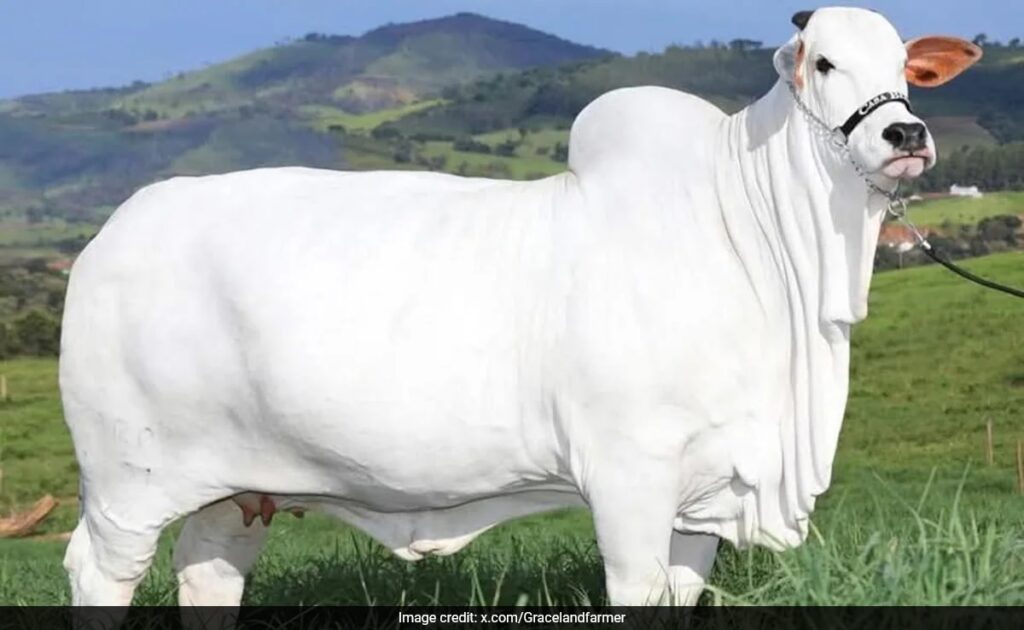
All About Indian Nelore Breed Cow Viatina-19, World’s Most Expensive

Word Count: 325 | Estimated Reading Time: 2 minutes


An Indian-origin cow is the world’s most expensive cattle. As per the Guinness World Record, the cow – Viatina-19  – was sold for Rs 40 crore at an auction in Minas Gerais, Brazil in 2023. The cow reportedly weighs around 1,101 kg, twice the average weight of other cows of the same Nelore breed.

The 53-month-old stands out for her gorgeous white fur, loose skin, and a noticeable hump on her shoulders.

In addition to setting a world record, Viatina-19 won Miss South America at the “Champion of the World” competition in Fort Worth, Texas. It’s a Miss Universe-style cattle contest pitting bulls and cows from various nations against one another. Her exceptional muscle structure and rare genetic lineage contributed to her victory.

The Nelore breed is well known for its ability to adapt to tropical climates and disease resistance. Due to this, Viatina-19’s embryos are in high demand globally for breeding programs.

Lorrany Martins, a veterinarian, said that Viatina-19 was the closest to perfection attained so far. “She’s a complete cow and has all the characteristics that proprietors are looking for,” Martins added.

According to Oklahoma State University data, Brazil is now the world’s largest breeder of Nelore cattle, and the breed has been exported to Argentina, Paraguay, Venezuela, Central America, Mexico, the United States, and numerous other nations.

At least 80 per cent of cows in Brazil are Zebu cattle, a subspecies that originated in India and is distinguished by its hump and dewlap.

Viatina-19 belongs to the Nelore breed, also known as the Ongole breed, which was first brought to Brazil in the 1800s. Reports suggest that this muscular breed originated from the Prakasam district of Andhra Pradesh, India, and was first introduced by the Aryans around 2,000 years before the Christian era.

The Nelore breed, which makes up the majority of Brazil’s cattle stock, is primarily raised for meat. According to the US Department of Agriculture, Brazil has about 230 million cows.


Source link

Most Popular Articles