


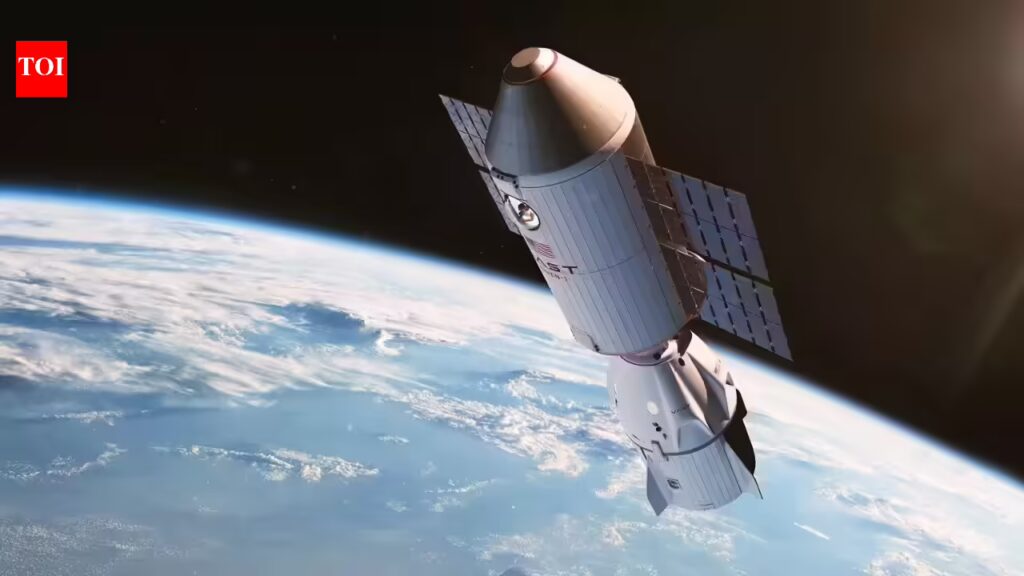
For more than two decades, the International Space Station has been the constant in low Earth orbit. NASA has been clear that the ISS will not last forever, with current plans pointing to a controlled deorbit around 2030, as reported. Now, private companies are stepping forward, among them, Vast Space, which appears closer than the rest. Its compact commercial outpost, Haven-1, is shaping up to become the world’s first commercial space station. Assembly is already underway, and while the launch has slipped slightly.
World’s first private station Haven-1 set to be built in 2027
Haven-1 is not massive. The station has been designed as a compact, modular outpost that can be launched in one piece aboard a single SpaceX Falcon 9 rocket. That decision alone sets it apart from many rivals. Originally, Vast Space had been targeting a 2026 launch, which has now shifted to 2027, with the company pointing to the first quarter as the most realistic window. As reported, CEO Max Haot said the team is confident in that timeline and has not slipped in some time.That still puts Haven-1 well ahead of most competitors. Experts say the schedule is aggressive but not reckless, mainly because the station relies heavily on hardware that already exists.
How SpaceX makes Haven -1 possible
One reason Haven-1 feels different is its tight integration with SpaceX. Once in orbit, the station will rely on a SpaceX Crew Dragon capsule for key life-support functions, including oxygen and power. But Crew Dragon is already proven, having carried astronauts to and from the ISS for years.This approach avoids reinventing systems that already work. It also shortens development time. Vast Space has reportedly hired a significant number of former SpaceX and NASA engineers, which helps explain how a company that started with an empty building is now talking about orbital flight in under four years.
NASA helped in the progression in Haven-1 satellite earlier this year
Earlier this month, Vast Space completed Haven-1’s primary structure. By the end of the year, Vast plans to carry out a full test campaign with NASA.NASA may not have officially published all requirements for its post-ISS commercial stations yet, but any company hoping for long-term relevance needs the agency on its side. NASA has been unusually open about its plans for a post-ISS future. The agency does not want to own the next generation of space stations. For now, Haven-1 remains on the ground. Being assembled and tested. Still, if all goes as planned, sometime in 2027, a single Falcon 9 could lift the first privately built space station into orbit.


