


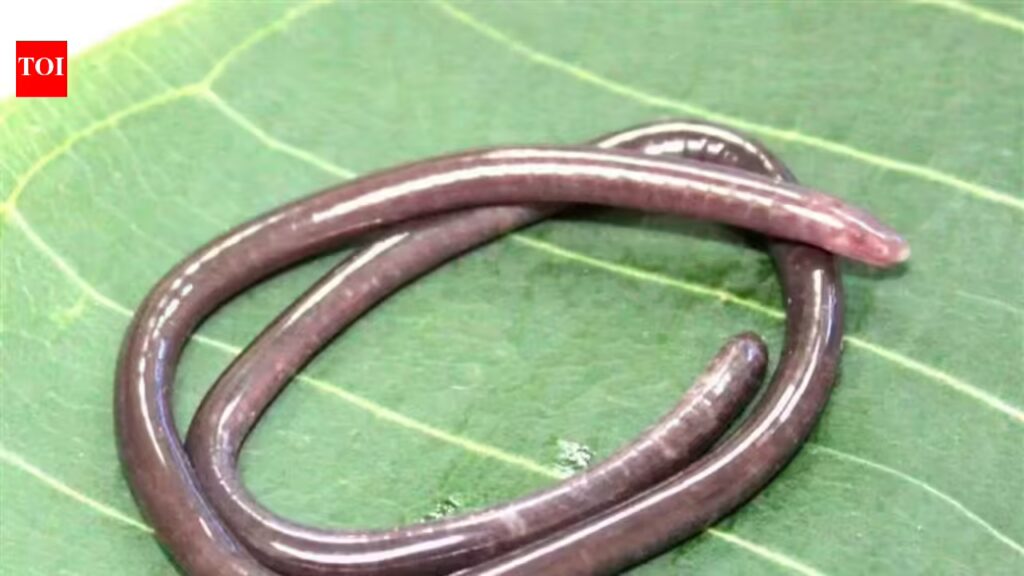
Kolkata: Indian scientists have discovered a rare subterranean amphibian species in the northern Western Ghats of Maharashtra and named it Gegeneophis valmiki.The discovery, made by a multi-institutional research team led by the Zoological Survey of India (ZSI), has been published in the international journal Phyllomedusa. The species was first collected in 2017 by K P Dinesh, senior scientist at ZSI, during surveys on the Valmiki Plateau in Maharashtra’s Satara district. It has been named after the historic Maharshi Valmiki Mandir located near the discovery site.
“This group of animals is incredibly difficult to study,” Dinesh said. “Members of the genus Gegeneophis, commonly called blind caecilians, live almost their entire lives underground. Their eyes are hidden beneath bone, and they look so much like earthworms.” ZSI Director Dhriti Banerjee underlined the urgency of documenting such species. “Globally, 41 per cent of amphibians are threatened with extinction,” she said. “If we fail to identify species in time, we risk ‘silent extinctions’, where organisms disappear before science even knows they exist.”


