
Related News

Patna: A monumental banyan tree (Ficus benghalensis) located on the Indian Tobacco Company (ITC) campus in Munger has been identified as one of the world’s oldest scientifically dated living trees

NEW DELHI: Unexpected side effects from medicines often come to light only after a drug is widely used. To strengthen monitoring of such cases, India’s drug regulator has directed pharmaceutical

Mathematical model reveals how ambitious you should be. A mathematical model has now cracked the exact degree to which one should be ambitious and unlike conventional wisdom, it says ‘don’t

NEW DELHI: NASA’s Psyche spacecraft has pulled off a dramatic flyby of Mars, capturing striking close-up views of the Red Planet, including the massive Huygens Crater, as it slingshots deeper

For a long time, scientists believed that only amphibians like salamanders could regrow complex limbs. But then came some groundbreaking findings from Texas A&M University. Researchers there discovered that mammals

NASA’s Jet Propulsion Laboratory recently reached a significant achievement in space travel technology. They successfully tested a lithium-fed magnetoplasmadynamic (MPD) thruster, establishing a domestic power milestone for power output in

Trending News

In today’s digital age, the opportunity to make money online without any initial investment is more accessible than ever before. Whether you’re a student looking to earn some pocket money,

In today’s digital world, make money online has become a dream many want to turn into reality. Whether you’re looking for a side hustle or aiming to build a full-time

JSW Cement, the building materials arm of Sajjan Jindal-led JSW Group, has reduced the size of its upcoming initial public offering (IPO) to Rs 3,600 crore and will open the

The agricultural Gross Value Added (GVA) growth is expected to moderate to 4.5% in the first quarter of FY26, down from 5.4% in the preceding quarter, according to a report

Foreign portfolio investors (FPIs) turned net sellers in the Indian equity market in July, pulling out Rs 17,741 crore amid rising global trade tensions. According to data from NSDL, this

Avenue Capital Group-backed Asset Reconstruction Company (India) Ltd (ARCIL) has filed its draft red herring prospectus (DRHP) with markets regulator Sebi on Friday to raise funds through an initial public

27 million tons of nanoplastics found in the North Atlantic Ocean, capable of devastating marine life and penetrating the human body |

Word Count: 716 | Estimated Reading Time: 4 minutes


27 million tons of nanoplastics found in the North Atlantic Ocean, capable of devastating marine life and penetrating the human body

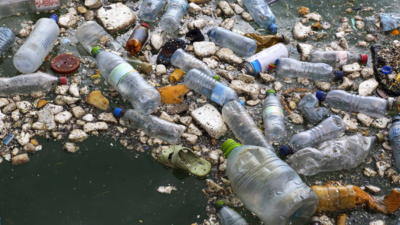
A study by the Royal Netherlands Institute for Sea Research (NIOZ) and Utrecht University has revealed that the North Atlantic Ocean contains approximately 27 million tons of nanoplastics — microscopic plastic particles smaller than one micrometer. These tiny plastics, invisible to the naked eye, pose serious threats not only to marine ecosystems but also to human health. The particles can penetrate deep into organisms, including humans, potentially causing unknown biological harm. This discovery sheds light on a previously hidden form of pollution that is far more pervasive and damaging than larger plastic debris.

27 million tons of nanoplastics saturate the North Atlantic

The research team collected water samples during an expedition aboard the research vessel RV Pelagia, traveling from the Azores to the European continental shelf. By filtering particles smaller than one micrometer and analyzing their chemical signatures with advanced mass spectrometry techniques, scientists were able to quantify the sheer volume of nanoplastics floating in the ocean. This study marks the first-ever accurate measurement of nanoplastics in the marine environment, revealing that these particles outnumber larger microplastics and macroplastics in the North Atlantic alone.

Pathways into the ocean and ecosystem impact

Nanoplastics enter marine ecosystems through multiple routes. They often result from the breakdown of larger plastic debris exposed to sunlight, but can also be carried by rivers or transported through the atmosphere, falling into oceans via rain or settling directly on the surface. These microscopic plastics can infiltrate all levels of the ocean food chain, from bacteria to fish and even top predators such as humans. Scientists are particularly concerned about their ability to penetrate tissues, including brain tissue, raising urgent questions about their effects on health and ecosystems.

The urgent need to prevent further pollution

Despite the massive quantity of nanoplastics already present, experts warn that cleanup is virtually impossible due to their tiny size and widespread distribution. The study emphasizes the critical need to prevent further plastic pollution entering marine environments. Ongoing research aims to understand the full impact of different types of nanoplastics and to determine if similar levels exist in other oceans worldwide. This discovery calls for stronger global action to reduce plastic waste and protect both ocean life and human health from the silent but pervasive threat of nanoplastics.


Source link

Most Popular Articles